A rare collection of early aviation glass lantern slides documenting the long flights of Italian aviator Carlo Francesco Lombardi will be Rosebery Hotel LondonUK, March 11. Historic photographic slides, estimated at £800 to £1,200 (approximately $1,071 to $1,606)are thought to represent some of the earliest surviving examples of aerial photography.
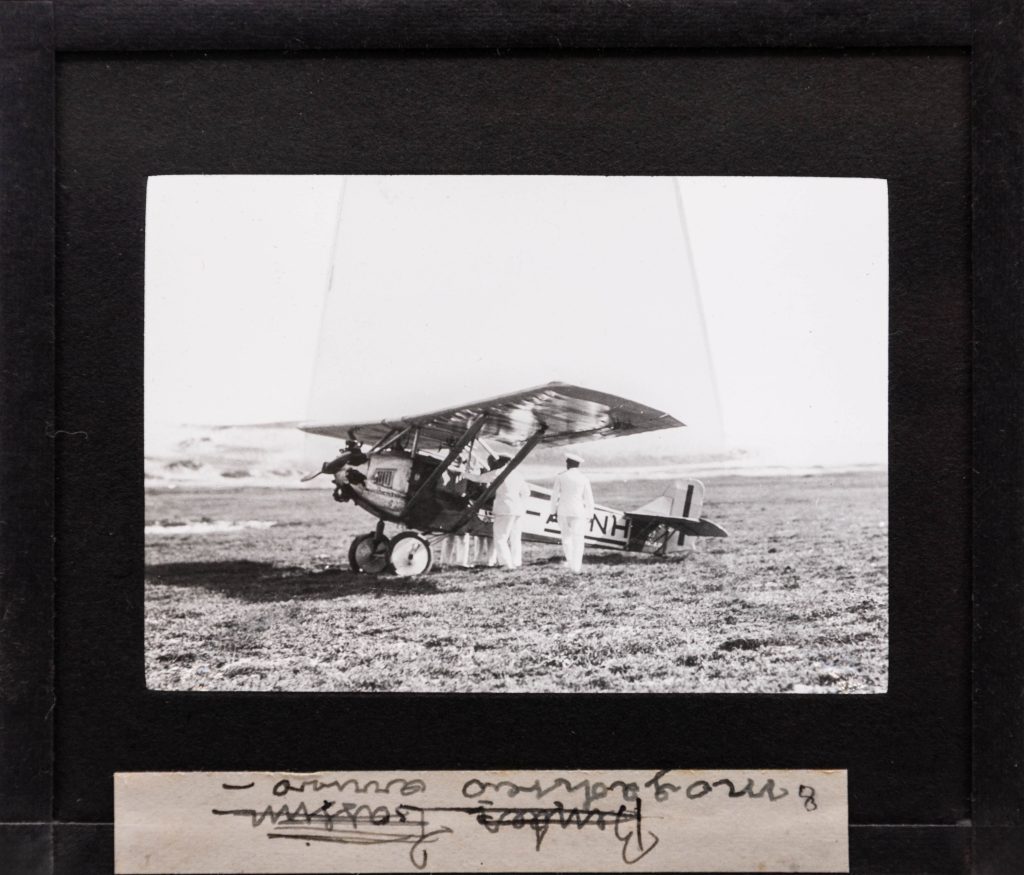
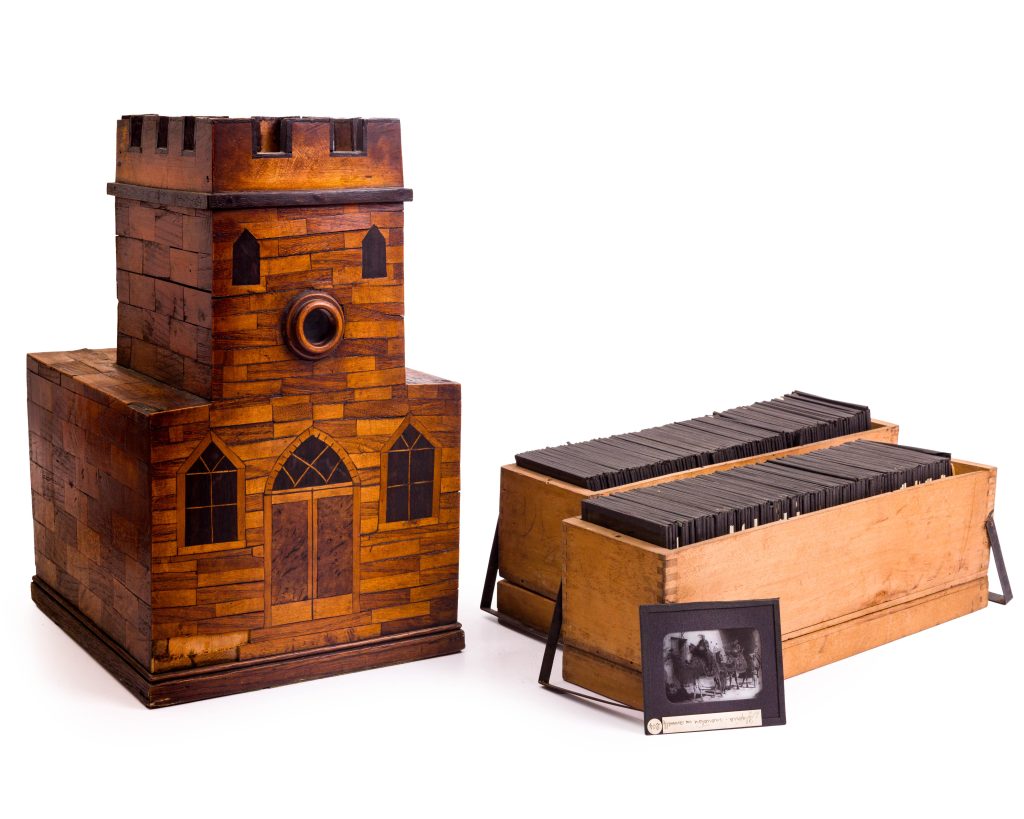
The collection includes approximately 200 gelatin silver glass slides and a handcrafted wooden slide viewer. According to the auction house, the materials came directly from the Lombardi family. Lombardi, commonly known as Francis Lombardi, was an influential figure in the development of Italian aviation during the first half of the 20th century. He began flying during World War I, serving as a fighter pilot at the age of 17. During the war, he achieved eight aerial victories and received three Silver Medals for Military Valor.
In the postwar years, Lombardi was closely associated with Italy's early long-distance flying career. During the 1920s and early 1930s he flew the Fiat AS.1 on several ambitious routes, including flights from Rome to Mogadishu, routes across the African continent and a journey from Vercelli to Tokyo. In addition to his flying career, he founded Azionaria Vercellese Industrie Aeronautiche (AVIA) in his hometown of Vercelli, a company focused on the design and production of light training and touring aircraft. After World War II, Lombardi played a role in the partial reconstruction of the Italian aviation industry. Among other projects, he helped convert surplus military aircraft such as the Macchi C.205 and Fiat G.55 to civilian use. He remained active in aviation for many years.
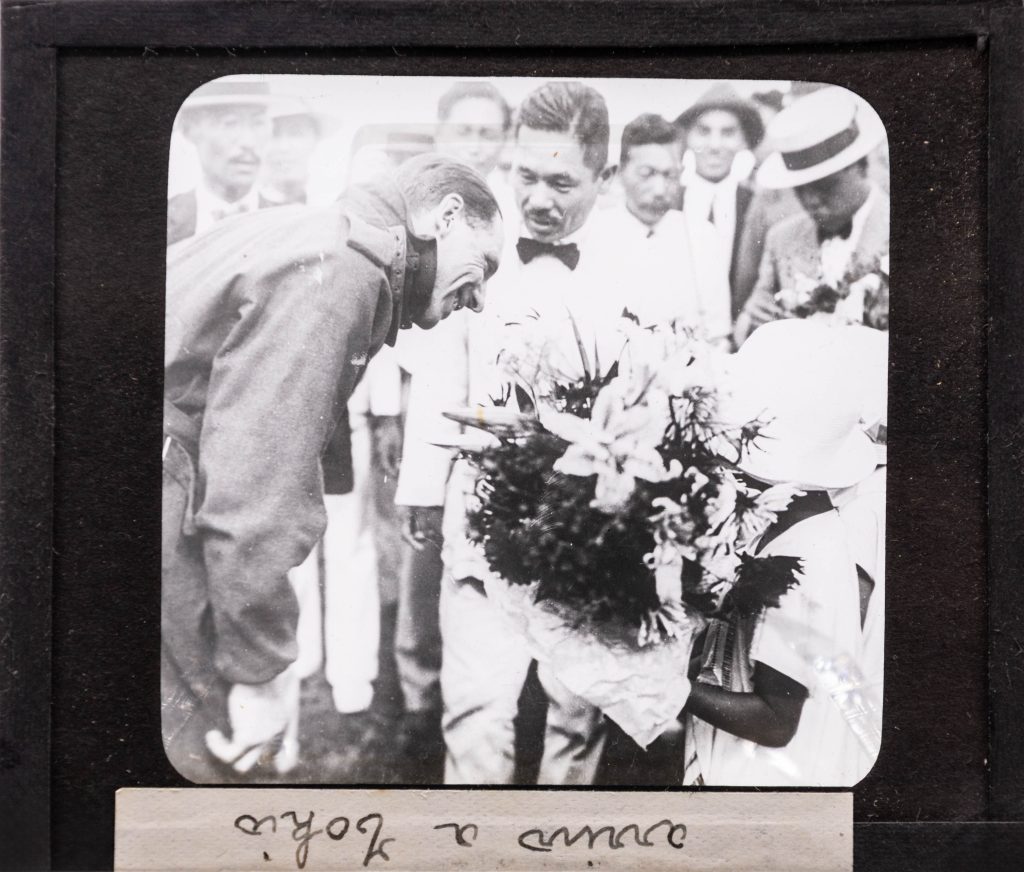
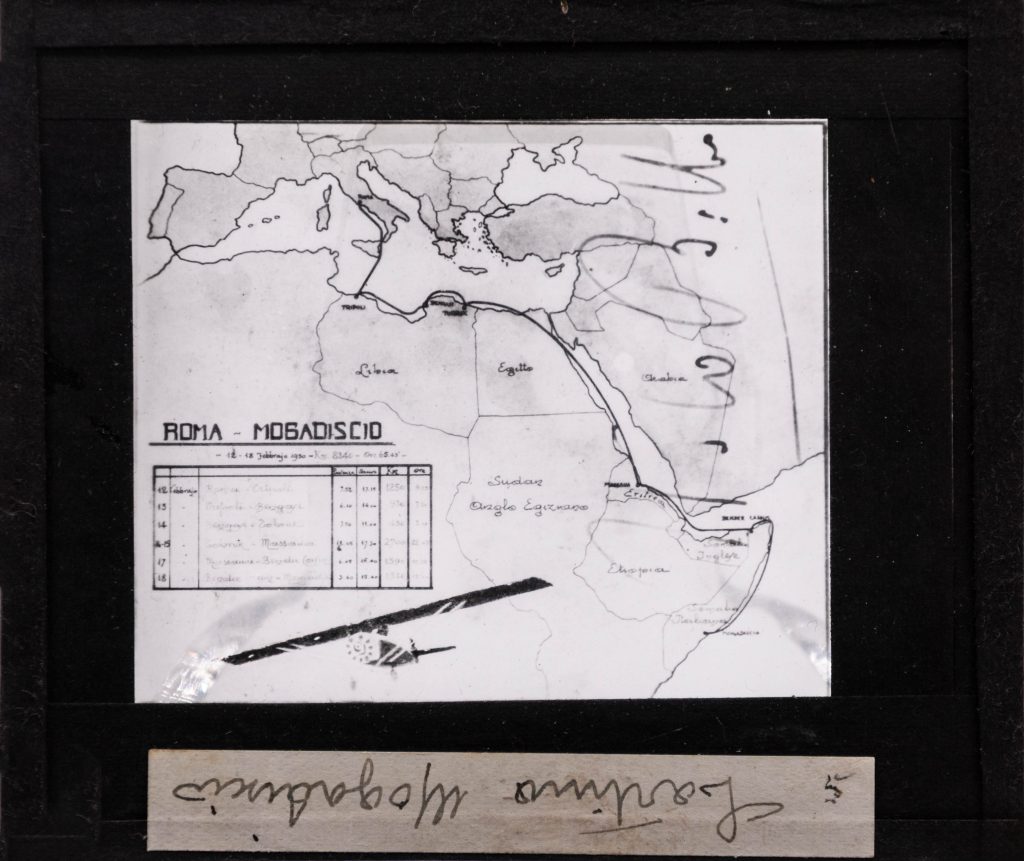
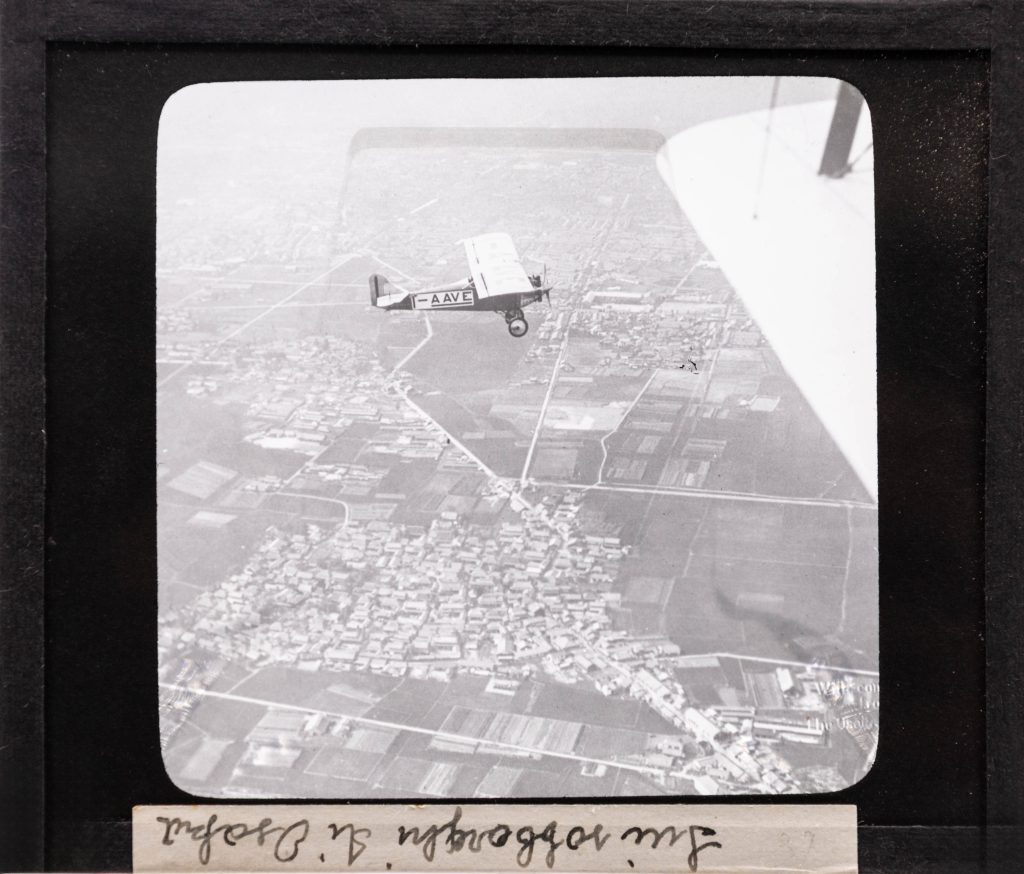
The glass slides themselves, with individual captions, chronicle Lombardi's travels and flights. Among them are marked “Arriving in Mogadisio,” showing his arrival and reception in Mogadishu, and “Arrive in Tokyo,” chronicling the end of his trip to Japan. Another slide was titled “Rome-Mogadisio” shows a map of the African flight's route, with a table listing the various segments, while aerial photos capture Lombardi's plane in flight, with the aircraft registration number I-AAVE visible over a town below.
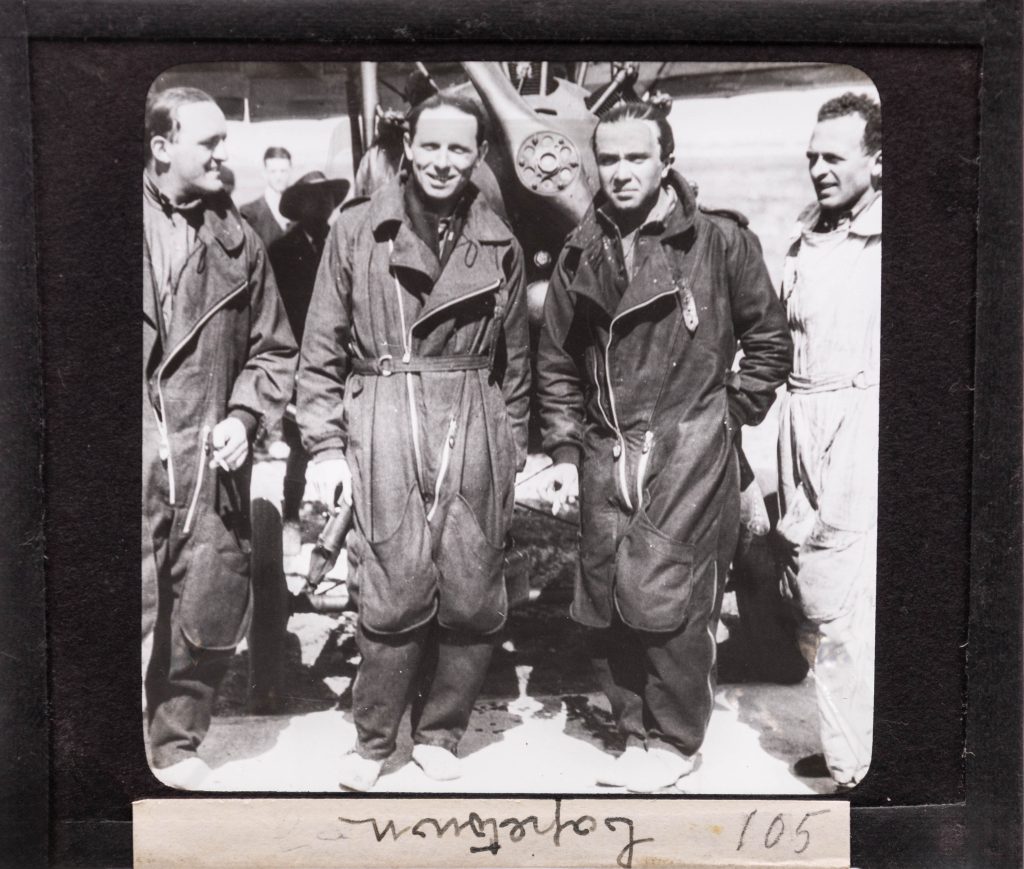
Other slides depicting planes and crowds at Mogadishu airport were titled “mogadisho,” and a photo titled “Lombard and Pierotti,” shows Lombardi and other pilots standing in front of an airplane in flight gear.”Lombardi slides are an early example of aerial photography. They capture a transformative moment in flight, when long-distance flights were moving from experimentation to workable reality. It is very rare for such a large, cohesive group to survive a career as a pilot, especially one with direct family lineage”, says Anna Evans, Head of Fine Decoration at Roseberys.
Glass lantern slides date back to the 17th century, although they became more common in the late 19th and early 20th centuries after the development of photography. Beginning in the 1890s, gelatin silver slides were widely used in lectures, scientific demonstrations, and educational demonstrations. These images are produced by contact printing a photographic negative onto a layer of light-sensitive gelatin, which is then sealed between two sheets of glass. When projected through magic lanterns using candlelight, spotlights, and later electric lighting, these slides allowed viewers to see distant events and locations decades before motion pictures and modern projection systems became commonplace. Their use continued until the 1940s, when they were gradually replaced by film.
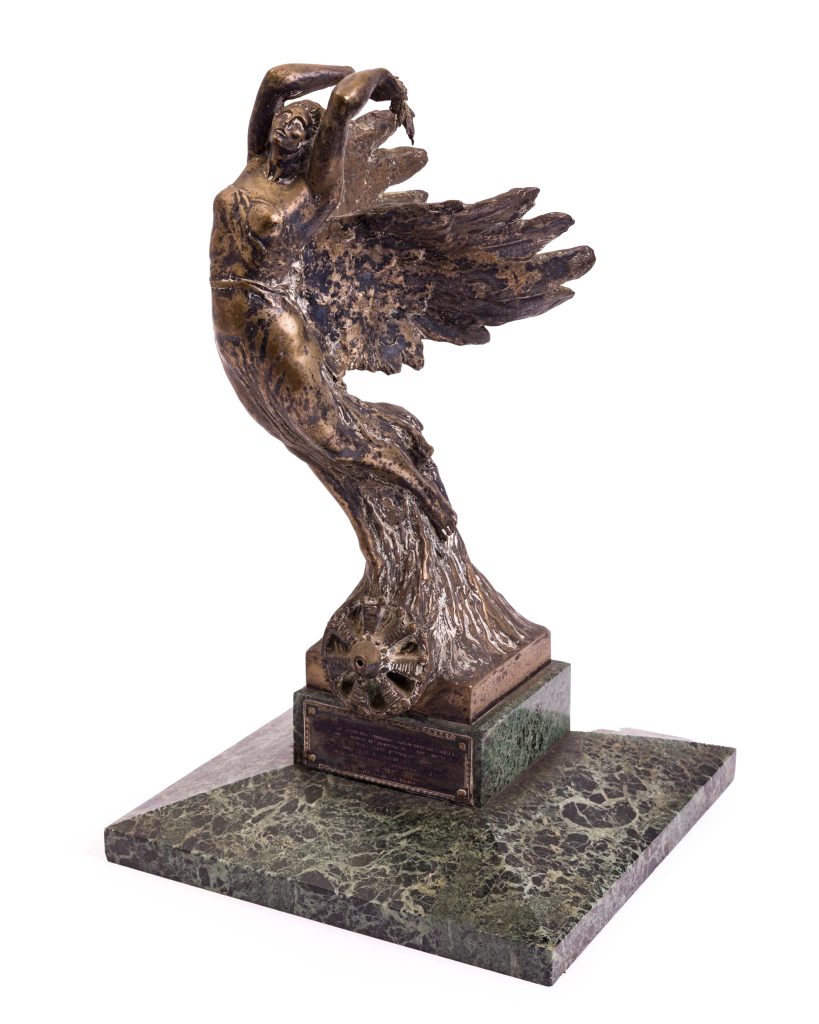
The auction also includes an array of memorabilia related to Lombardi’s aviation career. These include the silver-plated bronze and green antique marble trophy awarded after the 1929 International Touring Challenge. The trophy has a winged Nike statue on top and is engraved with Lombardi's inscription. Other works in the group include framed material documenting Lombardi's flights and aircraft. One of the highlights is a large route map showing several of his main journeys, including Vercelli – Tokyo, Rome – Addis Ababa, Rome – Mogadishu and Peripolo Africa, with distances and dates marked.
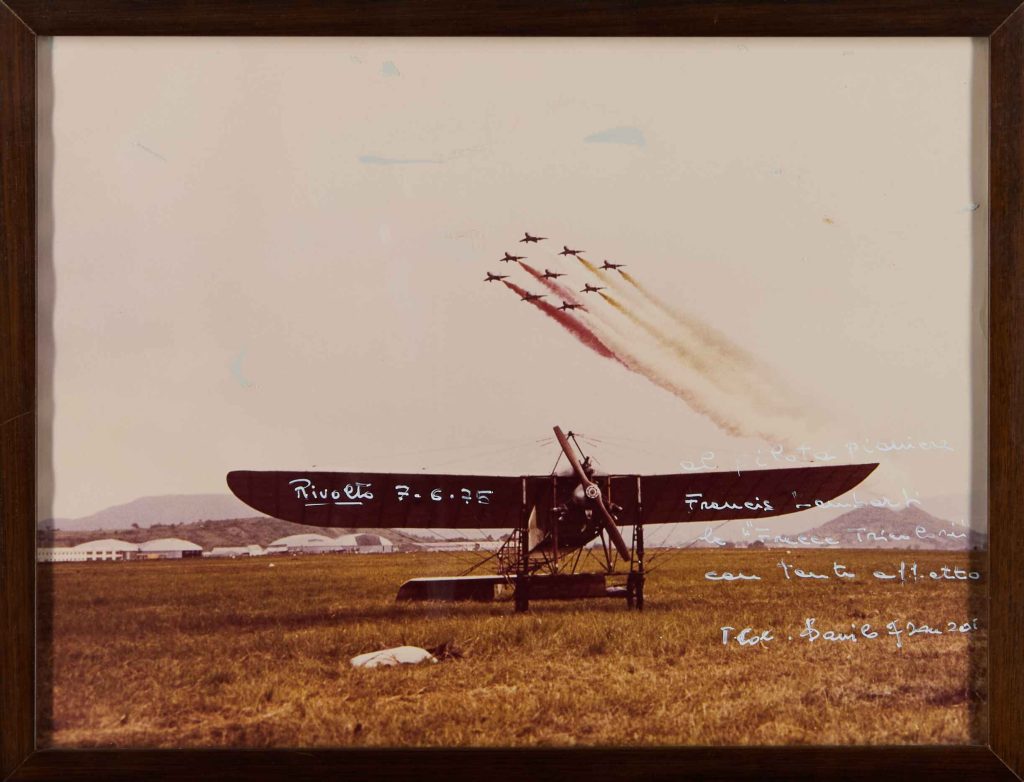
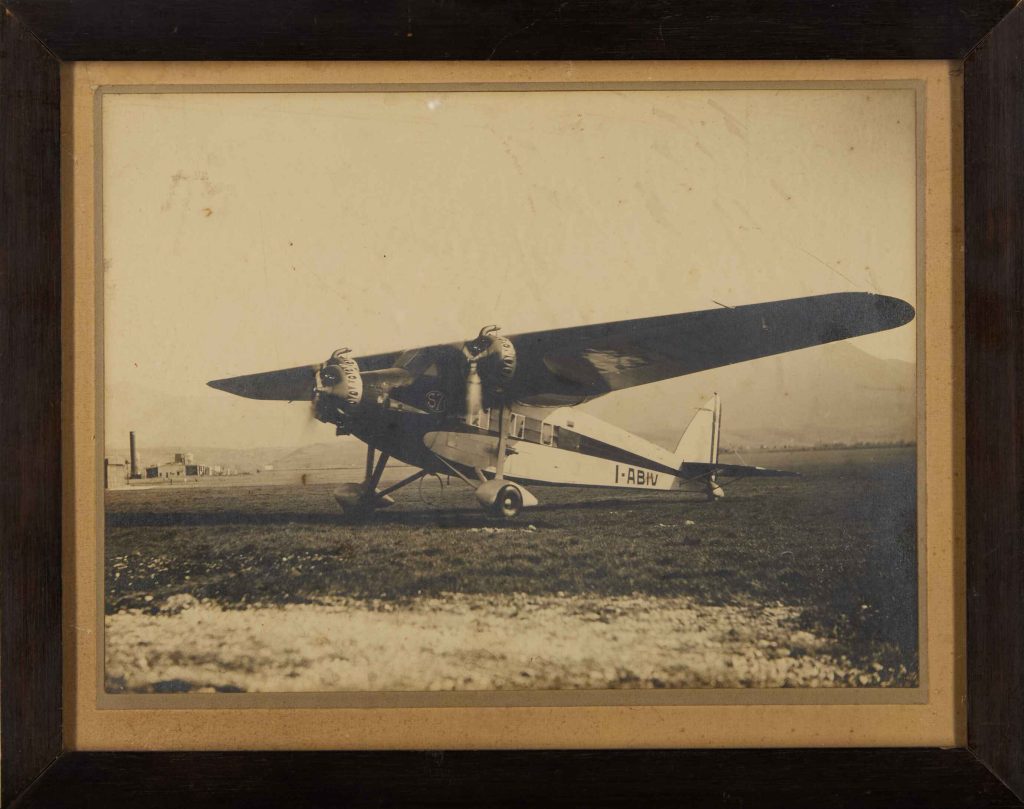
The lot also contains photos of a Fiat AS.1 monoplane, a Savoia-Marchetti S.71 and Lombardi's Fiat 501 during the 1922 Circuito del Garda race. Other images show aircraft from Frecce Tricolori flying behind the AS.1. The set also includes a studio-style front view of a single-engine aircraft, a reproduction of an early photo of a groundbreaking biplane in flight, and several other aviation-related photos from Lombardi's career. For more information about Roseberys London, please follow this link: www.roseberys.co.uk.