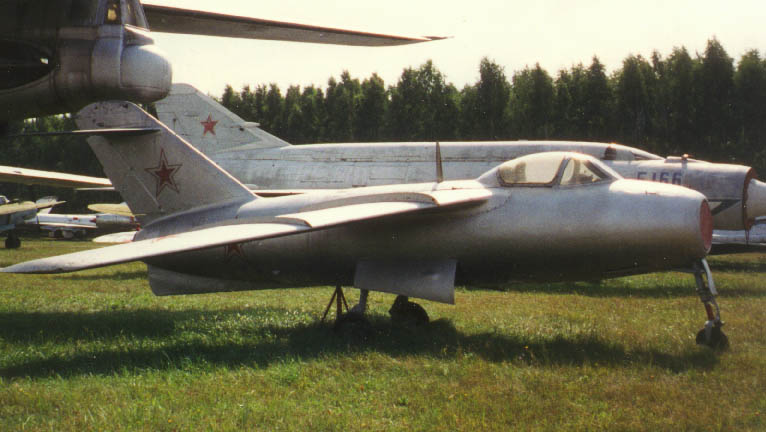
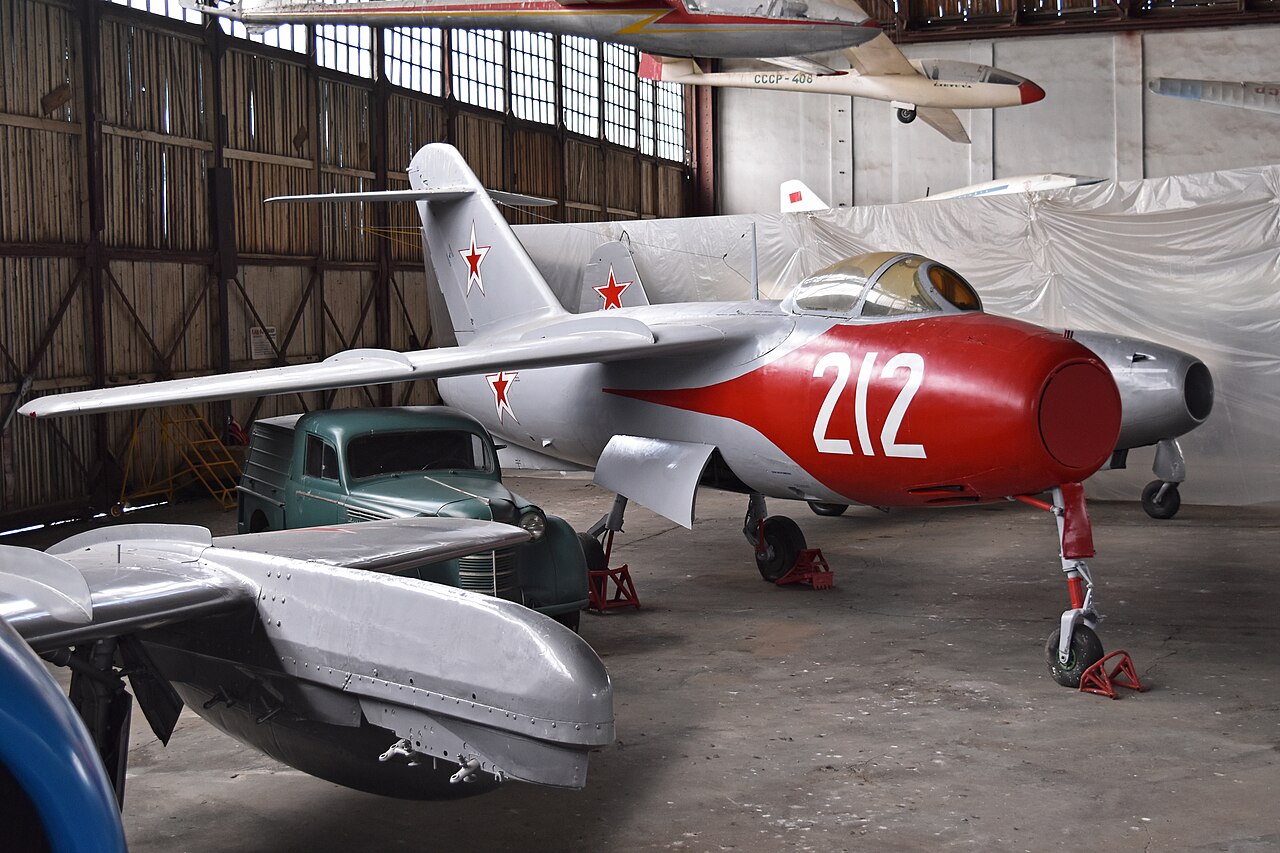

78 years ago (January 8, 1948), on this day in aviation history, the Lavochkin La-15 took to the skies for the first time. Known by many names, the La-15 was an early Soviet fighter aircraft that helped develop the Soviet Union's highly successful Mikoyan-Gurevich MiG-15 Fagot. Lavochkin/Plant 21 named this early fighter the Izdeliye 52, the US Air Force called it the Type 21, and NATO called the La-15 the Fantail. Lavochkin had previously successfully designed single-engine fighter jets for the Soviet Union during World War II. Later in the war, Lavochkin began developing the La-150 single-seat jet fighter to counter the German Me 262 Schwalbe. Following the La-152, Lavochkin went on to design the La-160, the first Soviet swept-wing fighter to fly (June 1947). Lavochkin developed the La-168 based on the La-160, a design modified to accept a Soviet engine based on the Rolls-Royce Nene.
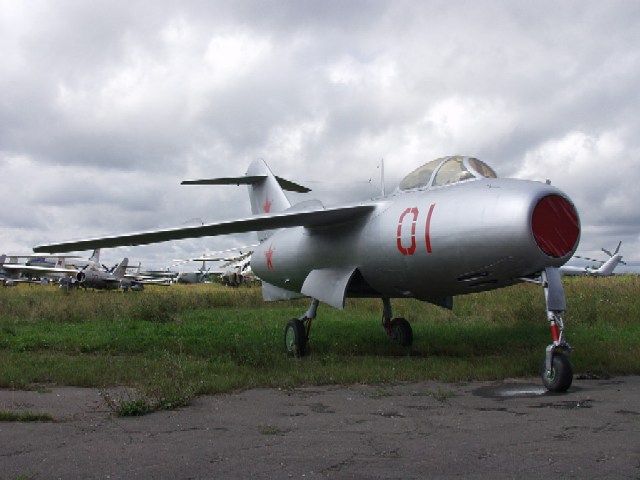
Eventually, the La-15 emerged from the lineage of earlier Soviet fighters, and the technology was tested on other experimental jet bombers. The La-15 has a barrel-shaped fuselage, shoulder-mounted swept wings, and high-mounted stabilizers (similar to a T-tail). Lavochkin's fighter proved to be a pilot's dream due to its reliability and smooth handling. The La-15 has a pressurized cabin, which facilitates high-altitude operations and pilot comfort. However, the design of the fantail aircraft was complex, and Soviet officials lacked enthusiasm due to the expensive and complex tooling required to produce the aircraft. The Lavochkin La-15 is powered by a Klimov RD-500 turbojet engine that produces 3,500 pounds of thrust. Klimov pushed the fantail's maximum airspeed to 626 mph. The La-15 has a climb rate of 6,240 feet per minute, a range of 618 nautical miles, and an altitude of 44,300 feet. The weaponry is three 23 mm Nudelman-Suranov NS-23 automatic cannon, each with 100 rounds of ammunition. Lavochkin built 235 La-15s until the aircraft was retired in 1953. The only fantail aircraft to survive today is on display at the Central Air Force Museum in Monino, Russia.